Reviewed by Ron McLaughlin, Energy Advisor & Red Seal Carpenter; last updated August 12, 2026.
Across our window assessments on Vancouver Island, one pattern keeps showing up in homes built in the early 2000s, particularly between 2000 and 2006. These homes are starting to show the same window problem at the same time. If you’ve noticed black stripes or smudges inside your window glass, not on the surface but trapped between the panes, you’re not imagining it, and you’re not alone. This is a common sign of what’s called butyl strip failure, and we’re seeing it in homes all across the island.
This guide breaks down what’s actually happening inside your windows, why it tends to show up in homes of this era, what it means for your comfort and energy bills, and when it’s time to consider replacement.
What Is a Butyl Strip, and Why Does It Matter?
A butyl strip is a thin band of flexible, rubbery material that’s used to seal the edges of your window glass. Think of it as the glue and gasket combined that holds your window’s glass panes together and keeps the air sealed in between them. In the industry, you’ll also hear it called butyl tape, butyl sealant tape, or butyl rubber compound. All of these all refer to the same material.
Most modern windows use double or triple panes of glass with a gap in between filled with an insulating gas (often argon). That gap is what gives your window its energy efficiency, acting like a thermal cushion between the cold outside air and your warm living room. The butyl strip is what keeps that gas sealed inside and keeps moisture and outside air from getting in. When people refer to this combination of glass panes, gas, and sealed edge, they’re describing what’s technically called an insulated glass unit, or IGU for short.
This little strip of rubber does a lot of work. It needs to:
- Stick firmly to both the glass and the metal spacer bar that separates the panes (this is sometimes called bonding strength or peel adhesion)
- Flex slightly as the glass expands and contracts with temperature changes, without cracking or pulling apart
- Resist water and moisture so humidity can’t sneak into the sealed gap (this is its water resistance)
- Stay flexible even in cold weather, which is especially important during Vancouver Island winters
- Hold up to sunlight exposure over many years, known as UV resistance
Butyl rubber is used well beyond windows. You’ll find it in roofing, HVAC duct systems, and even car manufacturing, because it’s so reliable at creating a tight, lasting seal.
Why Are So Many Early 2000s Windows Failing Now?
Nothing lasts forever, and window seals are no exception. Most window manufacturers expect a butyl seal to last somewhere between 15 and 25 years under normal conditions. If your home was built between 2000 and 2006, your windows are now right in that window of time where seals commonly start to give out, which is exactly why we’re seeing this issue pop up so consistently in homes of this era.
Sun Exposure Speeds Things Up
One thing we notice again and again is that windows facing south or west tend to fail earlier than windows facing north or east. The reason is simple, those windows get hit with more direct sun throughout the day. That constant heating and cooling cycle, known as thermal cycling, puts extra stress on the seal every single day, year after year. Add in UV radiation (the sun’s ultraviolet rays), and you’ve got a recipe for the seal breaking down faster than it would on a shadier side of the house.
It’s Often the Same Windows, Across an Entire Neighbourhood
Here’s something interesting we’ve noticed: when we assess multiple homes in the same neighbourhood or development, it’s often the exact same window brand and style showing problems. This usually means an entire subdivision was built using windows from one supplier, all manufactured around the same time. So if your seals are failing, there’s a good chance your neighbours’ windows from the same era are heading the same way, even if they haven’t noticed it yet.
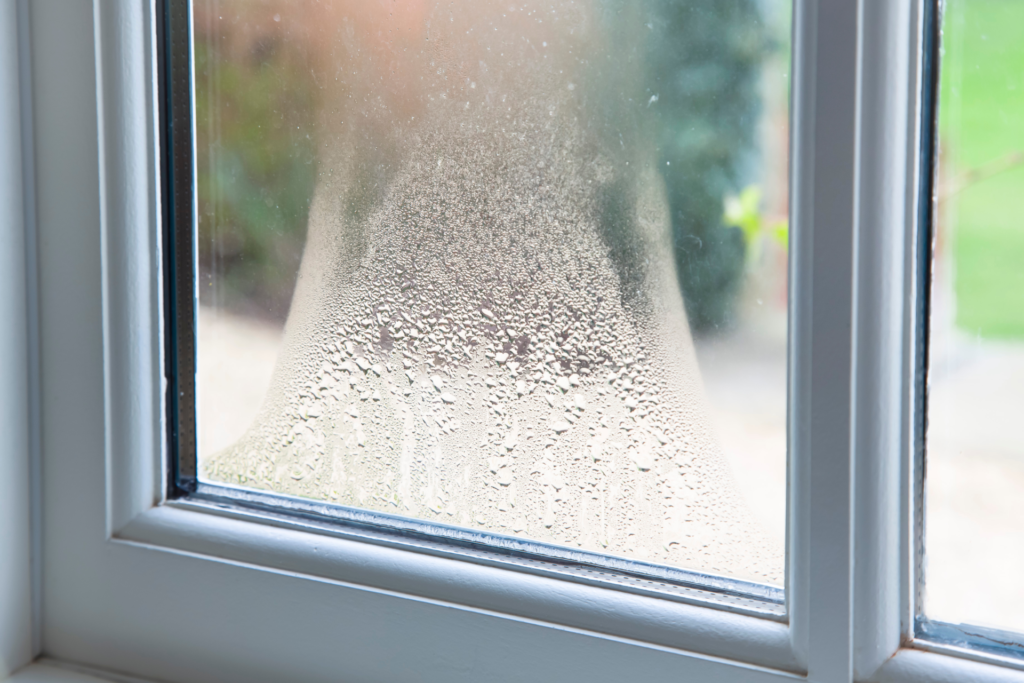
What to look for: Black stripes, smudges, or shadowy lines that appear inside your window glass (not on the surface where you’d wipe it) are the clearest sign of a failed seal. It’s easy to mistake this for dirt or condensation at first—but if it won’t wipe away, it’s happening inside the glass itself.
What Actually Happens When the Seal Breaks Down?
Once that butyl seal starts to fail, it sets off a chain reaction inside your window. Here’s what happens, step by step:
- The insulating gas escapes. The argon gas that was keeping your window energy-efficient slowly leaks out. Without it, your window starts performing more like a single layer of glass than a proper insulated window.
- Moisture gets in. Once the seal is compromised, humid air can seep into the gap between the panes. This is what causes that foggy, cloudy look between the glass that won’t go away no matter how much you clean it.
- Internal parts shift out of place. The metal spacer bar that holds the panes apart can move from its original position as the seal degrades. This is exactly what creates those visible black stripes inside your glass.
- Your energy bills go up. With the insulating gas gone and moisture inside, your window loses its ability to keep heat in during winter and out during summer. That means your furnace and air conditioner have to work harder.
- Some windows get harder to open. On slider-style windows in particular, this internal shifting can cause the window to bind or stick. If that window is meant to be a fire escape route, a window that won’t open properly is a real safety concern.
Should You Repair the Seal, or Replace the Whole Window?
For most early 2000s homes on Vancouver Island, replacing the full window tends to be the smarter choice in the long run. Here’s why.
Just Replacing the Glass: A Short-Term Patch
It is possible to replace just the glass unit and leave the existing frame in place. The problem is that if your frame is from the same era as the failed glass, it’s also approaching 20-plus years of sun exposure and temperature swings. Putting brand-new glass into an aging frame is a bit like putting new tires on a car with a worn-out engine—you’ve fixed one part, but the rest isn’t far behind. There’s a good chance you’ll be dealing with another issue within a few years.
Full Window Replacement: The Better Long-Term Investment
Replacing the entire window, including the frame, sash, and glass together, gives you a complete, fresh start. When you choose ENERGY STAR® certified windows (these meet a performance standard measured by something called U-factor, which simply measures how much heat a window lets through; the lower the number, the better the window performs), you also open the door to some solid government rebates that help offset the cost. Shoreline installs ThermoProof windows, which are manufactured right here in British Columbia and meet that same ENERGY STAR® standard. Because they’re made locally, ThermoProof windows also avoid a lot of the cost increases and shipping delays affecting imported window brands right now, which makes them a strong choice on both quality and price.
Here are the main rebate programs available to BC homeowners replacing their windows:
- BC Hydro Rebates: $100 per window or door, up to $2,000 total, as long as the windows meet the required energy performance standard
- FortisBC: Additional rebates available for natural gas customers replacing older, inefficient windows
Most rebate programs require you to apply and get approved before any installation work begins. If you’re noticing signs of seal failure, it’s worth starting the assessment process now rather than waiting until winter, when both contractors and rebate processing can get backed up.
Signs Your Windows May Have Butyl Strip Failure
Not sure if this applies to your home? Here are the most common signs we see:
- Black lines, stripes, or smudges inside the glass (not on the outer surface)
- Cloudiness or fogging between the panes that never clears, even after cleaning
- Condensation that seems to be trapped inside the glass rather than on top of it
- Drafts or cold spots near your windows, even when they’re fully closed
- Windows that are getting harder to open, close, or lock
- Energy bills that have crept up without an obvious reason
- Frames that look cracked, brittle, or weathered from years of sun exposure
If your home was built between 2000 and 2006 and any of this sounds familiar, it’s worth booking a professional assessment. We commonly see these signs show up across several windows in the same home at once—especially on the south- and west-facing sides.
How Shoreline Building Performance Approaches Window Assessments
Shoreline Building Performance is a CleanBC Better Homes registered contractor serving homeowners and strata corporations across Vancouver Island. When we assess your windows, we don’t just look at the glass, our assessments are led by a Red Seal carpenter and expert energy advisor who looks at how your windows fit into your home as a whole system.
A Shoreline window assessment includes:
- A visual inspection to check the condition of the seal and whether the spacer bar has shifted
- A look at which direction your windows face and how much sun exposure they get
- A comparison of your current windows against today’s ENERGY STAR® performance standards
- A check of which rebates you may qualify for, plus help getting pre-approved
- Coordination with a registered energy advisor where one is needed
We also walk you through the rebate and financing paperwork, so you’re not stuck filling out forms for BC Hydro, CleanBC, and FortisBC on your own without expert guidance.
Thinking About Other Upgrades Too? Bundling Can Save You More
If you’re already planning to replace your windows, it’s worth thinking about what else your home might need. Pairing window replacement with attic or wall insulation, a heat pump upgrade, or general air sealing can unlock bonus rebates and deliver a bigger overall improvement to your home’s comfort and efficiency than tackling these projects one at a time.
This is especially relevant for strata corporations and property managers. If multiple units in your building share the same window brand from the early 2000s, which is common, a coordinated, building-wide upgrade plan usually delivers better results and better pricing per unit than handling each one separately.
Get a Free Window Assessment from Shoreline Building Performance.
If your home was built in the early 2000s and you’re noticing any of these signs, don’t wait. Rebate approval needs to happen before installation starts, and assessment slots fill up quickly heading into peak renovation season. Contact Shoreline BP to book your complimentary window and door assessment.
Frequently Asked Questions About Butyl Strip Seal Failure
What is a butyl strip in a window, exactly?
A butyl strip is the rubbery sealant that runs around the edge of your window’s glass, between the panes. It’s what keeps the insulating gas locked inside and keeps air and moisture from getting in. When people talk about a window’s insulated glass unit, or IGU, the butyl strip is the part doing the actual sealing. Once it breaks down, the window can no longer hold its seal, and its energy performance drops.
Why am I seeing black lines inside my window glass?
Those black lines are almost always a sign that the internal spacer bar (the thin metal frame that holds your two panes of glass apart) has shifted out of place. This happens once the butyl seal around it starts to break down and lose its grip. It’s a clear, reliable sign that the seal has failed and the window isn’t performing the way it’s supposed to anymore.
Can I just fix the seal instead of replacing the whole window?
Sometimes, yes—you can replace just the glass unit and keep the existing frame. But for homes built in the early 2000s, the frame is usually just as old as the glass, and it’s been through the same 20-plus years of weather and sun exposure. Replacing only the glass often means you’re putting a new component into an aging frame that may need replacing soon anyway. In most cases, full window replacement is the better long-term move, especially since ENERGY STAR® certified windows open the door to government rebates.
Are there rebates available for window replacement on Vancouver Island?
Yes. Homeowners on Vancouver Island can access several rebate programs for qualifying window and door replacements, including BC Hydro rebates, and FortisBC rebates. BC Hydro offers $100 per window or door, up to $2,000. To qualify, windows generally need to meet a performance standard called ENERGY STAR® Tier 2 (measured by something called U-factor, which has to be 1.22 W/m²-K or lower). Most programs also require approval before installation starts. Shoreline BP can walk you through the full process.
How long do window seals usually last?
Most window seals are built to last somewhere between 15 and 25 years under typical conditions. If your home was built in the early 2000s, your windows are now right in that range where seal failure becomes common. Windows that face south or west tend to wear out faster, since they get more direct sun and more daily temperature swings. If your home falls into this window of time, it’s a good idea to get your windows checked.
Is butyl sealant tape the same thing as a butyl strip?
Yes, these terms all describe the same material, just used in different contexts. You might hear it called butyl tape, butyl strip, butyl rubber compound, or butyl sealant tape, they’re all referring to the same flexible, adhesive rubber used to create airtight seals. In window manufacturing, butyl strip and IGU edge seal are the most common terms. In roofing or HVAC work, you’re more likely to hear butyl tape or foil-backed butyl rubber mastic tape.